Just How Welding Evaluation Functions: A Comprehensive Guide for Professionals
Welding inspection plays a crucial duty in making certain the safety and security and integrity of bonded frameworks. It entails an organized method that includes both visual assessment and progressed testing approaches. Specialists must acquaint themselves with crucial requirements and guidelines regulating the market. Understanding the common issues that can occur throughout welding is vital. This guide will check out these components in information, giving insights into the processes that maintain quality and stability in welding.
Comprehending the Significance of Welding Assessment
While numerous may ignore the importance of welding assessment, it plays an important duty in making sure the honesty and security of bonded frameworks. Reliable welding evaluation identifies prospective defects and defects that can compromise structural strength and bring about catastrophic failings. The examination process includes various techniques, such as visual assessments, ultrasonic testing, and radiographic assessments, each contributing to the total evaluation of weld quality.
In enhancement to guarding the architectural honesty, welding assessment ensures compliance with industry requirements and client requirements. By ensuring that welds satisfy required tolerances and features, assessments aid preserve the integrity and long life of parts in various applications, from construction to aerospace. Moreover, a rigorous examination process cultivates a society of top quality and responsibility amongst suppliers and welders. Ultimately, welding evaluation is not merely a step-by-step step; it is a crucial method that underpins the security and efficiency of crafted systems across varied sectors.
Secret Standards and Regulations in Welding Examination
The structure of reliable welding assessment copyrights on adherence to established guidelines and requirements. Numerous organizations, such as the American Welding Culture (AWS) and the American National Specification Institute (ANSI), set forth standards that ensure high quality and security in welding methods. Key standards, such as AWS D1.1 for architectural welding and ASME Section IX for pressure vessels, provide comprehensive criteria for welding procedures, certifications, and evaluations. Regulatory frameworks, consisting of those from the Occupational Safety And Security and Health And Wellness Management (OSHA), mandate safety and security practices and employee securities in welding environments. Conformity with these criteria is crucial for accomplishing consistent weld high quality and decreasing the danger of failings. Additionally, worldwide standards like ISO 3834 further improve international uniformity in welding evaluation techniques. Professionals must stay notified regarding these policies to ensure that their examination techniques line up with market expectations and legal needs, therefore guarding both workers and structural honesty.
Initial Prep Work and Aesthetic Evaluation Techniques

Reliable welding assessment starts with a thorough pre-inspection checklist that assures all required conditions are met prior to the actual inspection takes place. Following this preparation, visual problem recognition plays a vital duty in evaluating weld top quality, allowing assessors to find problems such as splits or improper blend. With each other, these techniques develop the structure for an effective welding examination process.
Pre-Inspection Checklist
Prior to beginning any welding examination, an extensive pre-inspection checklist is necessary to assure that all essential prep work are completed which aesthetic inspection techniques are efficiently utilized. Crucial element of this checklist include verifying the welding procedure specification (WPS), making certain all devices is calibrated and in excellent functioning problem, and validating that the examiner has the required certifications. Additionally, it is vital to evaluate any previous assessment reports and to examine the job atmosphere for security dangers. The examiner must also confirm that all pertinent paperwork, such as material certificates and inspection records, is easily offered. Finishing this list aids to establish a strong foundation for an effective inspection process, improving the integrity of the outcomes obtained.
Aesthetic Defect Identification
A successful aesthetic defect recognition process starts with mindful initial prep work and the application of established aesthetic evaluation strategies. Assessors need to ensure that the welding location is clean and well-lit, as ample visibility is necessary for spotting problems. A thorough examination of the weld joint's surface area permits the recognition of discontinuities, such as splits, undercuts, or porosity. Examiners commonly make use of tools like magnifying glasses or mirrors to boost their sight of hard-to-reach locations. Furthermore, they ought to recognize with the specific welding criteria and guidelines relevant to the job. By sticking to these techniques, inspectors can effectively determine prospective concerns, securing the stability of the weld and compliance with industry criteria.
Non-Destructive Screening Approaches: An Overview
Non-destructive testing (NDT) methods play an important role in the welding examination procedure by making sure the honesty and reliability of welded structures without causing any type of damages (API 650 Welding Inspection). These methods allow examiners to assess the top quality of welds while protecting the parts being examined. Usual NDT methods include ultrasonic testing, radiographic screening, magnetic home bit testing, and dye penetrant screening, each offering special advantages
Ultrasonic screening uses high-frequency sound waves to identify interior defects, while radiographic screening utilizes X-rays or gamma rays to envision the interior framework of welds. Magnetic particle testing discloses surface and near-surface issues by using an electromagnetic field and iron bits to the weld area. Dye penetrant screening highlights surface-breaking flaws through the application of a tinted color. With each other, these NDT methods give critical understandings into weld high quality, enabling professionals to make enlightened decisions relating to safety and conformity in welding applications.
Usual Defects and Their Ramifications
Recognizing usual problems in bonded joints is important for keeping architectural honesty and safety and security. Various problems can occur throughout the welding procedure, each bring possible implications for the overall efficiency of the structure. Porosity, identified by tiny gas pockets within the weld, can compromise the joint and endanger its load-bearing ability. Cracks may establish as a result of thermal stress or improper air conditioning, resulting in possible failure under stress. Insufficient fusion happens when the weld metal does not totally bond with the base product, resulting in weak joints that may not hold up against desired lots. Damaging, where the base steel is deteriorated, can also reduce the efficient cross-section of the weld. Additionally, too much reinforcement can create stress focus that could lead to failure. Recognizing these problems promptly enables restorative measures, making certain the durability and dependability of bonded structures in essential applications.
Tools and Equipment Made Use Of in Welding Evaluation
Efficient welding inspection relies upon a variety of specialized devices and equipment to guarantee the high quality and stability of bonded joints. Important tools include visual examination tools, such as multiplying borescopes and glasses, which permit assessors to closely analyze welds for surface defects. Non-destructive screening (NDT) techniques, such as ultrasonic testing, radiographic testing, and magnetic bit screening, are essential for recognizing inner imperfections without damaging the material.
Measurement devices, consisting of calipers and weld evaluates, assist establish and evaluate measurements conformity with specifications. In addition, solidity testers review the mechanical properties of welded joints. Personal safety tools (PPE) is likewise important, safeguarding the safety and security of assessors while functioning in potentially unsafe settings (API 650 Welding Inspection). Each tool offers a particular purpose, collectively improving the efficiency of welding examination and contributing to the reliability of finished jobs
Regularly Asked Concerns
What Credentials Are Needed to Become a Welding Examiner?
To end up being a welding inspector, people commonly need pertinent accreditations, such as AWS CWI or CSWIP, in addition to experience in welding processes, you can find out more engineering principles, and understanding of evaluation strategies, security criteria, and applicable codes.
How Often Should Welding Inspections Be Performed?
Welding examinations should be conducted routinely, ideally at numerous job stages, consisting of pre-weld, during-weld, and post-weld. Frequency might also rely on sector criteria, project specifications, and the intricacy of the welds entailed.
Can Welding Defects Be Repaired After Evaluation?

Yes, welding flaws can frequently be repaired after evaluation. Relying on the severity and sort of problem, ideal techniques such as remodeling or added welding may be utilized to recover architectural click for more info integrity and security conformity.
What Industries Require Regular Welding Examinations?

Various sectors, including building and construction, production, aerospace, and auto, call for normal welding inspections - API 650 Welding Inspection. These assessments ensure adherence to safety criteria and top quality control, decreasing risks connected with structural honesty and operational performance in bonded parts
Just how Do I Choose a Welding Examination Solution?
To pick a welding evaluation service, one need to consider certifications, experience, certifications, and sector online reputation. In addition, examining consumer testimonials and guaranteeing the service meets pertinent requirements can aid guarantee quality evaluations and reputable outcomes.
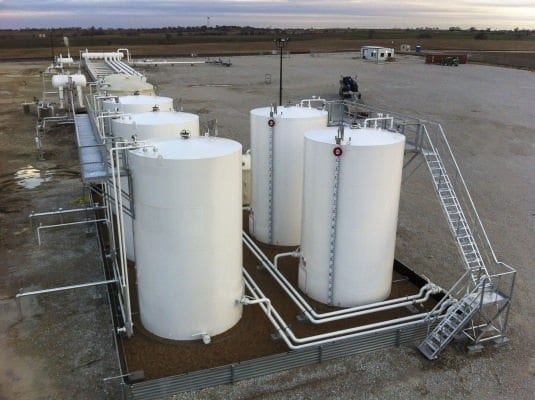
While lots of might undervalue the value of welding assessment, it plays a crucial role in making sure the integrity and safety of welded structures. Trick criteria, such as AWS D1.1 for structural welding and ASME Area IX for pressure vessels, give detailed criteria for welding qualifications, inspections, and procedures. Efficient welding evaluation begins with a detailed pre-inspection list that ensures all required conditions are fulfilled before the actual assessment takes location. Prior to commencing any type of welding assessment, a complete pre-inspection checklist is essential to assure that all required preparations are completed and that visual evaluation strategies are successfully used. Non-destructive testing (NDT) methods play a vital function in the welding inspection procedure by ensuring the honesty and dependability of bonded structures without creating any type of damages.